A Designer’s Review: Football Player on White for Embroidery
When a new design file lands in my library, my first instinct isn’t just to open it. It’s to visualize it stitched. I picture it on fabric, under a hoop, transformed from pixels or vectors into thread and texture. That’s the lens I’m using today for Football Player on White. As someone who regularly turns digital files into custom apparel and boutique merchandise, I want to share a practical, real-world evaluation of this illustration for embroidery projects.
First Impressions: Clean, Athletic, and Versatile
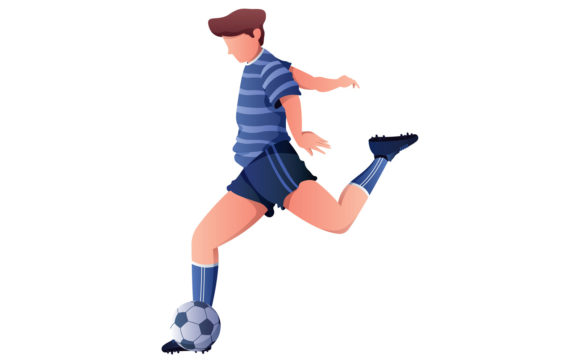
The moment I opened the vector files, the mood was clear. This is a crisp, modern flat illustration. The player’s action—kicking the ball—is captured in a simple, dynamic shape. There’s a sense of motion and energy, but without chaotic detail. The white background, as described, isn’t a literal element to stitch; it’s the clean negative space around the figure, which is a huge advantage. This gives the design a bright, open feel that works equally well as a bold standalone graphic or as part of a larger composition. For embroidery designers, that means the visual personality is athletic, upbeat, and straightforward—a graphic that speaks quickly and clearly, which is perfect for custom apparel and handmade products aimed at sports fans, active families, or gift-givers.
Where This Design Finds Its Natural Home
I immediately thought of a client request I had last season: a set of embroidered tote bags for a youth soccer league’s fundraising event. This design would have been a contender. Its flat, graphic nature translates beautifully to embroidery because the shapes are distinct. On a tote bag’s canvas, with a crisp satin stitch for the player and a fill stitch for the ball, it would look professional and vibrant. But its applications are wider.
Consider a custom sweatshirt for a coach or a proud parent. The design’s clarity ensures it remains readable even on a textured fleece backdrop. As a baby embroidery motif on a knit blanket or a toddler’s hoodie, the friendly, active figure feels appropriate without being overly aggressive. It’s also a prime candidate for an embroidered patch. The clean edges and lack of tiny interior fussy details mean it can be stitched at a moderate size and applied to caps, jackets, or bags with excellent results. For small business owners crafting holiday gifts or boutique product lines—think themed aprons for a sports-themed kitchen or pillow covers for a rec room—this graphic offers a ready-made, professional-looking asset.
Performance in Real Stitching Situations
Moving from theory to the machine, how does Football Player on White perform? The key here is the design’s simplicity. In embroidery, complex gradients and minute details can become muddled thread blobs. This illustration avoids that. The solid shapes of the player and ball are ideal for controlled fill stitches. The separation between elements (like the leg and the ball) is clear, which helps prevent thread bridges or unintentional merging during stitching, even on slightly stretchy fabric like a t-shirt.
For visual appeal and stitching clarity, this is a strong choice. On a light fabric, using darker threads, the figure will pop with high contrast. On a dark fabric, like a navy cap, reversing the concept—using light threads for the player and a contrasting color for the ball—would create a striking, readable result. This adaptability boosts the product value for crafters; one digital file can yield multiple different finished product looks. For customer trust and professionalism, a clean, well-stitched graphic like this reinforces that the maker pays attention to quality. It looks intentional, not accidental.
Caution Areas and Designer Notes
No design is universally perfect. While Football Player on White is versatile, there are scenarios where I’d proceed with careful planning. The main consideration is scale. If you’re thinking of a very small hoop size—for instance, on a baby’s tiny shirt collar or a delicate handkerchief—the solid fills of the body and ball might require a reduction in stitch density to prevent a stiff, bulky feel. Always test the design on scrap fabric first, especially if working with thin fabric like a linen tea towel, to ensure the fill stitches don’t pucker or distort the material.
Also, consider the fabric curve. On a curved surface like a cap, the design’s relatively wide, balanced shape should sit nicely, but you must use proper stabilizer to maintain its form. I’d avoid using this on heavily textured fabrics like a loose knit without a robust stabilizer plan, as the texture could break up the clean edges of the flat illustration. These are not faults of the design, but rather standard embroidery project considerations that a savvy designer should apply to any graphic.
Affecting Your Business and Craft
Beyond the stitch, this kind of design impacts your workflow and outcomes. For Etsy sellers and digital product sellers, having a clean, recognizable graphic like this in your arsenal aids in creating attractive printable mockups for your listings. It speaks to a clear niche—sports, activity, gifts—which helps with buyer engagement. For personalized gifts, such as adding a name below the player, the open white space around the figure provides a perfect layout area for text without crowding.
The handmade presentation becomes more cohesive. If your brand leans toward modern, clean styles, using this illustration across a line of products—totes, caps, pillow covers—builds brand consistency. Its giftability is high for occasions like birthdays, tournament participation awards, or Father’s Day. In a craft fair setting, products featuring this design would be quickly understood by browsing customers, aiding in quick recognition and sales.
Essential Pre-Stitch Checklist
Before loading this file into your machine, here’s my pragmatic list:
- Since the provided files are vector formats (AI, CDR, EPS), you will need to convert them to a suitable embroidery file format for your specific machine. Confirm the compatibility and process.
- Check thread color contrast. Play with schemes in your software. Does a two-tone approach (one color for player, another for ball) increase appeal for your target product?
- Review stitch density in your converted file. The solid areas can be dense; adjust if needed for your chosen fabric type.
- Confirm hoop size requirements. The design’s dimensions will dictate your minimum hoop.
- Inspect small details like the connection points between the leg and ball in your embroidery software preview to ensure they are stitchable.
- Test it in black and white mockups on both light and dark background images to gauge its versatility.
- Most importantly, confirm licensing before selling finished items or digital products. The product description provided does not specify license terms; you must verify this yourself to ensure your commercial embroidery or resale use is permitted.
In my view, Football Player on White is a robust, straightforward graphic from the Illustrations and Graphics category that holds real promise for embroidery applications. It doesn’t over-promise; it offers a clean, thematic shape that, with thoughtful execution, can elevate a custom apparel item, a holiday embroidery gift, or a line of small shop products. Its strength is its simplicity, which, in the world of thread and fabric, is often the most reliable kind of beauty.