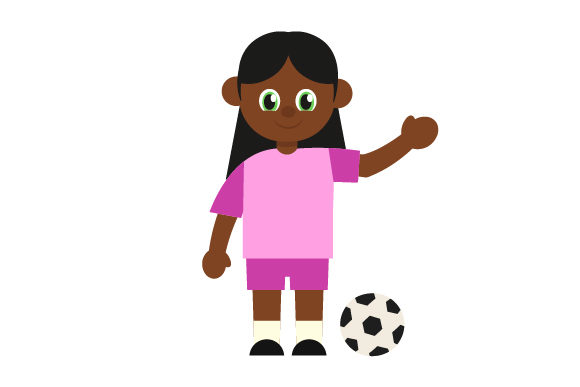
A Practical Review of an African-American Soccer Player Design
As a designer who regularly turns digital files into stitched reality, my first question about any new embroidery design is always, “How will it actually feel when it’s finished?” Today, I’m looking at a design titled African-American Soccer Female Player, considering its potential from my workbench. It’s a Sports and Crafts category design, and my evaluation is rooted in practical application—how it translates from screen to stitch, and ultimately, to a product someone will love, wear, or buy.
The First Impression: Athletic Grace & Craft-Friendly Layout
The design immediately conveys focused energy. The subject is poised, suggesting motion and skill rather than static posing. This mood is perfect for projects celebrating participation, achievement, or personal passion. The layout feels balanced, with clear negative space around the figure, which is a huge advantage for embroidery. It means you won’t be fighting with overly dense, crowded areas that can choke a machine embroidery design. The detail level appears thoughtful—likely using satin stitch for outlines and fill stitch for key elements, which translates to good stitch clarity without becoming impossibly intricate for smaller projects.
Where This Design Finds Its Perfect Home
Imagine you’re preparing a custom embroidered patch for a young player’s backpack, or a tote bag design for a soccer team mom. This is where this design shines. Its theme is specific yet universally relatable, making it ideal for personalized gifts. I’d naturally lean towards applying it to a sturdy canvas tote, a cotton sweatshirt embroidery, or a crisp apron for a coach. The personality is sporty and celebratory, so it fits baby embroidery on a jersey-themed blanket, or a cap for a fan. For small shop product lines, this design could anchor a series of sport-themed kitchen towels or pillow covers for a dedicated fan’s room.
In a real scenario, let’s say an Etsy seller wants to create a holiday gift line for sports families. Using this embroidery file on a high-quality hoodie creates a finished product with obvious value—it’s not a generic logo; it’s a representation. That boosts customer trust and the item’s giftability. For a craft business specializing in custom apparel, this design adds diversity to a sports portfolio, enhancing brand consistency as a source for thoughtful, specific themes.
Navigating Tricky Stitching Situations
While the design looks adaptable, some applications demand caution. On very small hoop sizes, the finer details might need simplification to preserve clarity. Stitch density in any filled areas should be checked; too dense on thin fabric like a t-shirt can cause puckering. Dark fabric requires careful thread color contrast planning—a test stitch on scrap material is essential here.
Textured fabrics or stretchy fabric like performance knit will need the right stabilizer to keep the figure crisp. On curved surfaces like caps, the design’s proportions must be checked in a mockup to ensure it sits well. For products destined for frequent washing, like baby clothes or kitchen towels, ensuring the stitch structure is robust (avoiding overly delicate single-line details) is key for longevity. This isn’t a critique of the design itself, but a reminder that its success depends on these embroidery project choices.
How This Design Elevates Your Project
From a visual appeal standpoint, this African-American Soccer Female Player design brings recognizable specificity. That’s a major asset. In a market saturated with generic balls and goals, a design representing a player, particularly a female athlete, stands out. This recognition directly impacts buyer engagement in an Etsy listing or at a craft fair. The handmade presentation feels professional because the subject matter is respectful and well-composed.
For commercial embroidery or creating digital product previews and printable mockups, this file—provided in SVG, PNG, EPS, and DXF—offers flexibility. The transparent PNG is invaluable for creating compelling design assets for your shop. Using it, you can show customers exactly how it would look on a light or dark fabric texture before they buy, which builds tremendous confidence.
A Designer’s Practical Checklist Before Hooping
Before I’d run this for any finished product, my personal routine applies:
- Test on scrap fabric first, ideally a piece similar to my final project fabric.
- Check thread color contrast against both light and dark backgrounds. I often test it in black and white mockups to see if the form holds up without color.
- Review stitch density by looking at the file in my software; are there any unexpectedly thick fill blocks?
- Confirm hoop size suitability. The design info doesn’t specify a minimum size, so I’d run a small test at my intended size.
- Inspect small details like facial features or equipment lines to ensure they’ll stitch cleanly at my chosen scale.
- Use proper stabilizer for the chosen fabric—this is non-negotiable for crisp results.
- Crucially, check whether the design works for both personal and commercial projects by confirming the licensing terms. This step protects your craft business and respects the digital artist.
Final Thoughts for Makers & Entrepreneurs
The African-American Soccer Female Player design is a strong, purpose-driven embroidery file. Its value lies in its clear theme and craft-conscious layout. It’s not just a graphic; it’s a potential emblem on a cherished handmade product. For the creative entrepreneur, it fills a niche, allowing you to serve a community looking for representation and celebration in sport. Whether for a personalized gift, a boutique branding item, or part of your small shop merchandise, its successful application hinges on those practical embroidery choices we all make at the machine. Approach it with preparation, and it will stitch up into something that truly resonates.