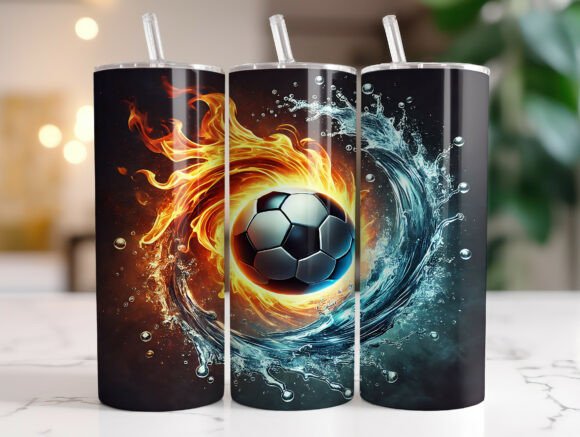
A Design Review: The Fire and Ice Soccer Ball Tumbler Wrap
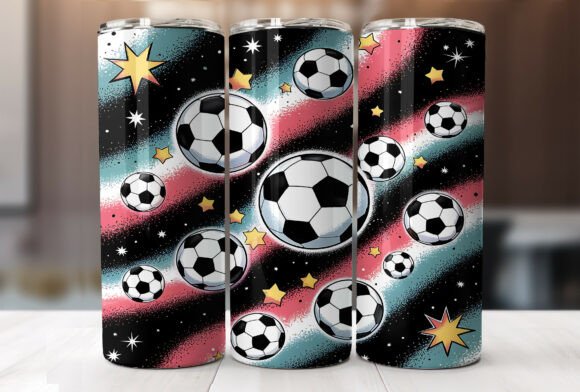
Let's talk about the Fire and Ice Soccer Ball Tumbler Wrap, not just as a digital graphic, but as a potential embroidery design asset. As someone who stitches for clients and my own small shop, my first question about any design is always: how will this translate into thread? What will it become in the hands of a crafter or on a finished product? This review is my practical judgment on that.
First Impressions: Mood, Theme, and Potential
The name itself—Fire and Ice—sets a strong thematic tone. It suggests contrast, energy, and a dynamic play of elements, which is perfect for a soccer theme. The provided dimensions, 9.3" by 8.2", indicate a substantial graphic. This isn't a tiny accent; it's a statement piece. My first thought was of a bold, central motif for a garment or bag. The high-resolution PNG files, both straight and tapered, offer flexibility, but for us in the embroidery world, that means we're looking at a clean, detailed image to use as a guide for creating our own machine embroidery design.
The layout feels like a classic, stylized sports graphic. It has a personality that leans towards celebratory and energetic, not overly cartoonish but definitely spirited. This creates a specific mood. It feels like it belongs on products for fans, for players, or as a personalized gift for someone passionate about the game. I immediately visualized it on a team custom apparel item, like a sweatshirt or a tote bag for a soccer league.
Real-Life Embroidery Scenarios: Where This Design Thrives
Imagine you're preparing a custom order for a client whose child is on a competitive soccer team. They want a unique, embroidered tote bag for gear. The Fire and Ice Soccer Ball Tumbler Wrap graphic, adapted into an embroidery file, could be the perfect focal point. Its size allows it to be the hero of the design, centered on the bag panel. Stitched out, the contrasting "fire and ice" elements would likely translate into striking color choices—perhaps fiery reds and oranges against cool blues and whites. This kind of visual impact adds perceived value and makes the handmade product feel special.
Beyond tote bags, this design has natural homes. A simplified version could make an excellent embroidered patch for a jacket or cap. On a baby embroidery item, like a blanket for a newborn in a soccer-loving family, a smaller, softer rendition using less dense fills could be charming. For small shop merchandise, such as tea towels or apron designs for a sports-themed boutique, it offers strong brand recognition. It's also ideal for holiday embroidery gifts—think a personalized pillow cover for a Christmas present for a soccer coach.
The Craft Business Perspective: Engagement and Trust
When you use a graphic like this as the foundation for your embroidery work, it affects more than just aesthetics. A clean, well-executed stitch-out based on a clear, high-quality graphic enhances customer trust. It shows professionalism and attention to detail. For an Etsy seller or a maker at a craft fair, a product featuring this theme, neatly embroidered, engages buyers who are looking for that specific sports connection. It boosts the handmade presentation because it feels intentional and designed, not generic. The "fire and ice" concept itself adds a layer of storytelling to the product, which can be a selling point.
Careful Application: Where to Proceed with Caution
While the graphic is large and detailed, that detail requires thoughtful translation into stitches. Not every element will embroider cleanly at smaller scales. If you're thinking of shrinking it down for a small hoop size, like for a child's hat or a detailed corner of a garment, you must inspect the smaller details closely. Some fine lines or contrasts in the original PNG might become muddy or require simplifying.
Stitch density is a key consideration. Areas representing "fire" and "ice" could become very dense if interpreted as solid fill stitches. On thin fabric or stretch fabric like t-shirts, high density can cause puckering or fabric distortion. On dark fabric, the color palette you choose needs to provide enough contrast for the design to remain clear and vibrant, especially if the original graphic uses light elements.
Applying this to curved surfaces like caps requires extra planning. The tapered PNG file is helpful for visualizing adaptation to tapered objects, but embroidering on a curved cap still demands careful digitizing to prevent distortion. Also, for products that need frequent washing, like kitchen towels or activewear, a very complex, dense design might not hold up as well over time compared to a simpler, more robust stitch pattern.
Practical Designer Notes Before You Stitch
My strongest advice is always to test the design on scrap fabric first. Use the PNG as a template to create your embroidery file, then stitch it out on the same type of fabric and with the same thread colors you plan to use for the final project. This reveals everything: how the fabric texture interacts with the design, whether your chosen thread contrasts well, and if any small details get lost.
- Review stitch density in your digitizing software. Balance detail with practicality.
- Confirm hoop size requirements for your intended project. The graphic's size suggests a larger hoop, but your final embroidered size may differ.
- Always use the proper stabilizer for your fabric and design complexity.
- Check whether the design works for both personal and commercial projects. The product description doesn't specify licensing. You must confirm licensing before selling finished items or digital products derived from this graphic.
- For previews and printable mockups, the high-resolution PNGs are excellent. But for actual stitching, they are just the starting point.
Final Thoughts on Visual Appeal and Value
The Fire and Ice Soccer Ball Tumbler Wrap, as a graphic asset, has strong potential for embroidery projects. It carries a theme that resonates with a specific audience, which is gold for creative entrepreneurs. When thoughtfully converted and stitched, it can enhance the visual appeal and perceived value of a finished product, making it more giftable and professional. Its success, however, hinges on the skill and care of the embroidery designer adapting it. It's not a one-click embroidery file; it's a foundation. Treat it like a good blueprint—respect its details, understand its scale, and build your stitched product with the practical realities of thread and fabric in mind. That's how a digital graphic becomes a beloved, tangible piece.