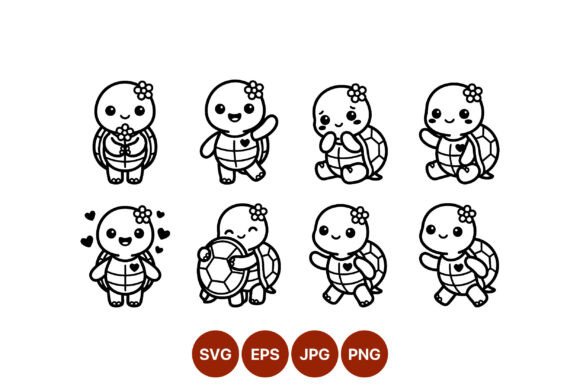
A Brand Designer's Take on the Cute Turtle Character Graphics
In my daily work as a brand designer and content marketer, a client's brief often lands in my inbox with a very specific mood requirement: "We need to feel approachable, friendly, and warm, but still polished." Opening the Cute Turtle Character Set for the first time, I knew immediately this collection of eight black and white line art turtles had hit that note perfectly. The first impression is one of gentle charm. These aren't loud, cartoonish mascots; they are subtle, expressive illustrations carrying flowers, hearts, and even a soccer ball. The emotional tone is inherently positive, fostering a sense of kindness and casual connection.
The Mood It Creates & The Audience It Attracts
This asset feels tailor-made for brands that value authenticity and a softer touch. Imagine a small business launching a new line of handmade children's products, a lifestyle blogger promoting a mindfulness challenge, or an online coach preparing a content kit for a summer wellness program. The turtles' various actions—waving, hugging—create a narrative of engagement and care. This isn't about premium minimalism or corporate austerity; it's about building audience trust through relatable, emotional connection. The line art style ensures it doesn’t look messy or childish, maintaining a professional appearance that can elevate casual branding.
Integrating Characters into a Real Marketing Workflow
Let’s frame this around a real project: a digital seller is refreshing their social media visuals to promote a seasonal "Slow Living" product launch. The core need is visual consistency across Instagram posts, Pinterest pins, and email banners. The Cute Turtle Character Set becomes a versatile anchor. The turtle holding a flower becomes a hero graphic for the campaign header. The one waving could be a recurring element in weekly update posts. The hearts icon adds a decorative accent to product label mockups. Because the set is cohesive—all the same style, scale, and detail level—it builds stronger recognition across every touchpoint, turning a single graphic design asset into a suite of branded templates.
Where These Turtle Illustrations Perform Brilliantly
For content creators and small business owners, practical application is key. This set excels in specific areas of marketing visuals:
- Social Media Graphics: As focal points in Instagram posts or Facebook ads, they draw attention without clutter.
- Content Marketing Assets: They are perfect for blog graphics, lead magnet covers, or media kit decorations.
- Printable Design & Merchandise: Their clean line art translates beautifully to event flyers, packaging inserts, or sticker designs.
- Digital Product Visuals: For online coaches or product creators, these turtles can adorn course workbooks or digital guide covers.
- Web Design Accents: Used sparingly in website headers or email banners, they create a welcoming first impression.
The design asset supports marketing goals by establishing a clearer visual hierarchy. When you place a turtle character beside a headline, the eye is guided. It breaks up text-heavy layouts in editorial design. It makes product presentation feel more thoughtful and designed, which directly impacts better engagement.
Practical Notes for the Brand Designer's Toolkit
Before hitting publish on any campaign using these illustrations, a few checks are essential. First, test it with your brand color palette. Being black and white, they are incredibly flexible; you can tint them with a brand color or use them in monochrome. Place them inside real campaign mockups—a Canva template, an ad builder, a packaging flatlay—to see how they scale. Preview on mobile screens; ensure the fine lines remain readable in small sizes, like on a social media profile icon.
Crucially, check how it pairs with your typography. These friendly characters often pair wonderfully with a clean sans-serif or a gentle script font. They might feel unbalanced with a very heavy display font or a rigid serif, so testing the spacing and balance is key. Finally, always confirm the commercial licensing before using any digital product in paid campaigns or client work. Knowing you have the right to use this design bundle for commercial design provides the foundation for confident, professional branding.
The Careful Application: When to Use with Caution
While versatile, the Cute Turtle Character Set has a specific personality. It should be used carefully in certain contexts. For formal corporate branding, such as a financial service’s annual report, it would likely feel incongruous. In dense information layouts where clarity is paramount, the illustrations could compete with the main message if not given adequate space.
Avoid using them on low-contrast backgrounds where the fine lines might disappear. For brands that are intentionally overly minimal, adding a character might disrupt the desired aesthetic. In text-heavy ads, the asset should serve as a supportive accent, not the primary focus. The key is understanding that this is a decorative brand element, not a data visualization tool. Its power is in emotion, not information.
Why This Set is a Strong Asset for Creative Entrepreneurs
For the blogger, the social media manager, the product creator—this set solves a common problem: the need for consistent branding without a huge design budget. Having eight coordinated characters means you can create a more memorable campaign with visual variety that still feels unified. It attracts an audience looking for warmth and authenticity. It supports content that needs to stand out in a crowded creative marketplace without screaming for attention.
In the end, reviewing the Cute Turtle Character Set from a professional standpoint, its value lies in its emotional clarity and design coherence. It’s a ready-made toolkit for building a visual language of kindness and engagement. When applied thoughtfully within a real marketing strategy—with attention to color, scale, typography, and licensing—it becomes more than just clipart. It becomes a genuine component of your brand identity, helping you tell a better, more visually compelling story to your audience.